Fresh Pins vs. Reused Images: Why Pinterest Rewards Newness
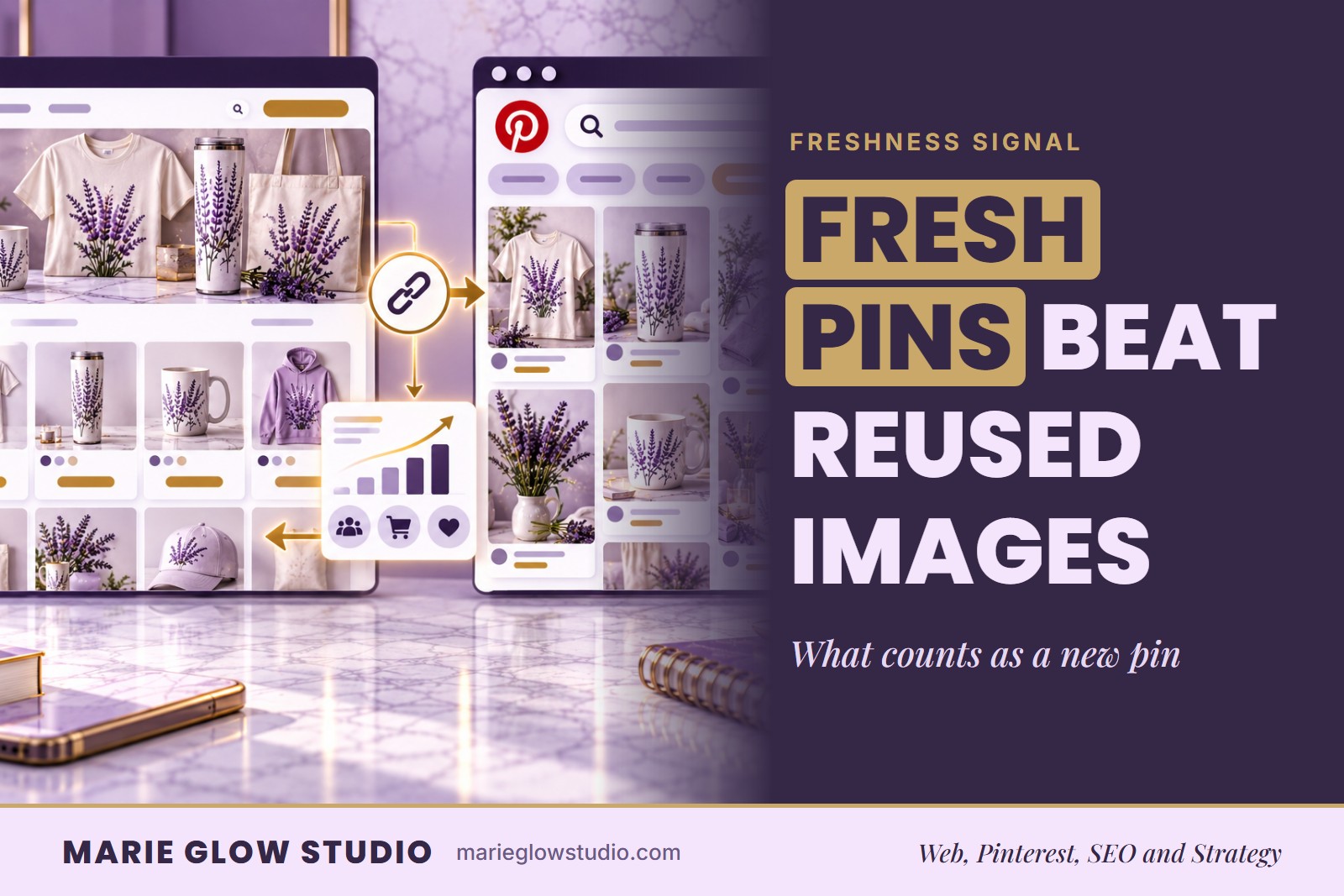
Pinterest treats freshness as one of several signals it weighs when deciding which pins to show, alongside quality, relevance and engagement. A pin built from a new image, title and description tends to get noticed. The same image pinned again under a new date tends to get buried instead.
What Does Pinterest Mean by a Freshness Signal?
A freshness signal is a piece of information Pinterest uses to judge whether a pin is new content or a repeat of something already seen. Marketing platforms that track Pinterest's algorithm, including Sprout Social, Dash Social and SocialBee, name freshness as one of the core signals the platform weighs, alongside the quality of the pin, how relevant it is to what someone searched, and how people engage with it once they see it. None of those four signals works alone. A beautifully designed pin that nobody saves or clicks will not outrank a plainer one that people act on, and a brand new pin on an irrelevant topic will not outrank an older, well matched one. Freshness is the tiebreaker that decides which of two otherwise similar pins Pinterest is more willing to test in front of new people.
Why Do Reused Pin Images Lose Reach?
Reused pin images lose reach because Pinterest already has a record of how people responded to that exact image, title and description the first time it circulated. Publishing the identical file again does not give Pinterest a new data point to test, so it has less reason to show the repeat to anyone beyond the audience who already saw it. A shop or service page can still be pinned many times. What has to change each time is the pin itself, not the page it points to. Reusing a product photo, a screenshot or a graphic you already published, with the same crop, the same words and the same file name, reads to the algorithm as the same content coming back around rather than something new worth testing.
What Actually Counts as a New Pin?
A new pin changes more than the publish date. A few things make a pin genuinely new rather than the same pin republished:
- A different image or graphic, not the same photo cropped slightly differently
- A new title that is not a word for word copy of a title already published
- A new description written for this specific pin, not pasted from an earlier one
- A fresh file name, since Pinterest can read a reused file name as a signal the asset itself has already been seen
The destination link is the one piece that is fine to repeat. Pinning the same product page, booking page or blog post more than once, each time with a new image and new wording, is a normal and expected way to use Pinterest. The problem is republishing the same pin, not revisiting the same page.
How Often Should a Business Create a New Pin for the Same Page?
There is no fixed number from Pinterest for how often a page needs a new pin, and nothing here promises a specific amount of reach for following one. A reasonable approach is to treat each page worth promoting as a page that deserves more than one pin design over time, built and published on a steady rhythm rather than in a single burst. A page that only ever gets pinned once, with the same image reused every time someone remembers to promote it again, is the pattern most likely to read as stale. A page that gets a handful of genuinely different pins spread out over weeks gives Pinterest several fresh data points to test instead of one repeated one. For a closer look at what else affects which pins get shown and when, see how the Pinterest algorithm weighs a pin overall.
What Should a Service Business Pin When It Only Has a Few Pages?
A salon, a contractor or a coach usually has far fewer pages to work with than a shop with dozens of products, which makes the same page getting pinned often unavoidable. The fix is still the same: change the pin, not the page. A booking page for haircuts can be pinned with a graphic about seasonal color trends one week and a graphic about what to expect at a first appointment the next, both pointing to the same booking link. A contractor's quote request page can be pinned behind a before and after style graphic one time and a plain checklist graphic the next. The page stays constant. The pin in front of it changes, which is what keeps each one eligible to be treated as new.
Does Freshness Replace Quality, Relevance or Engagement?
No. Freshness is one signal among several, not a shortcut around the others. A brand new pin with a blurry image, a vague title or a description with no real keywords in it still has to compete on quality and relevance once Pinterest decides to test it. Posting more often with weak pins is not the same as posting fewer, stronger ones on a steady schedule. The accounts that hold onto reach over time are the ones that keep producing pins that are both new and good, not the ones that treat freshness as the only thing that matters. For the fuller picture of why a well made pin can keep working long after it was published, see why Pinterest content can drive traffic for months.
What If Reach Already Dropped From Reusing Pins?
A sudden drop in reach traced back to recycled pins is not permanent. The repair is the same habit described above, applied going forward: stop republishing the same image and description, and start building a small, varied set of new pins for the pages that matter most. Why does my Pinterest reach suddenly drop walks through the other common causes, since freshness is rarely the only factor at play. If sorting out what in an account is stale versus what is working is hard to see from the inside, the Pinterest SEO Audit reviews the existing pins, boards and keywords on an account and hands back a ranked 30 day action plan for what to fix first.
Frequently asked questions
Does Pinterest's freshness signal mean a business needs to pin every day?
No. Freshness is about whether each pin is a new image, title and description, not about how often an account publishes. A smaller number of genuinely new pins, spaced out over weeks, serves the signal better than daily duplicates.
Can the same link be used on more than one pin?
Yes. The destination link, such as a product page or booking page, can be pinned more than once. What needs to be new each time is the pin itself, meaning a different image, title and description, not a repeat of one already published.
Will one new pin undo weeks of reused images?
Not by itself. Freshness is one signal Pinterest weighs alongside quality, relevance and engagement, so a single new pin helps but does not override an established pattern of recycled pins on its own.
Keep reading

How Pinterest Decides Which Pins to Show
If your Pins have barely any impressions, it is rarely bad luck. Here are the five things to check, in order, when Pinterest is not showing your Pins.
Why Does My Pinterest Reach Suddenly Drop?
A sudden drop in Pinterest reach usually traces back to duplicate pins, a gap in publishing, or the seasonal summer slowdown, not a broken account.

Why Pinterest Content Can Drive Traffic for Months
Not every Pin lasts. The ones that keep sending visitors share four traits, and each one is something you can check before you publish.