What a Service Business Website Needs
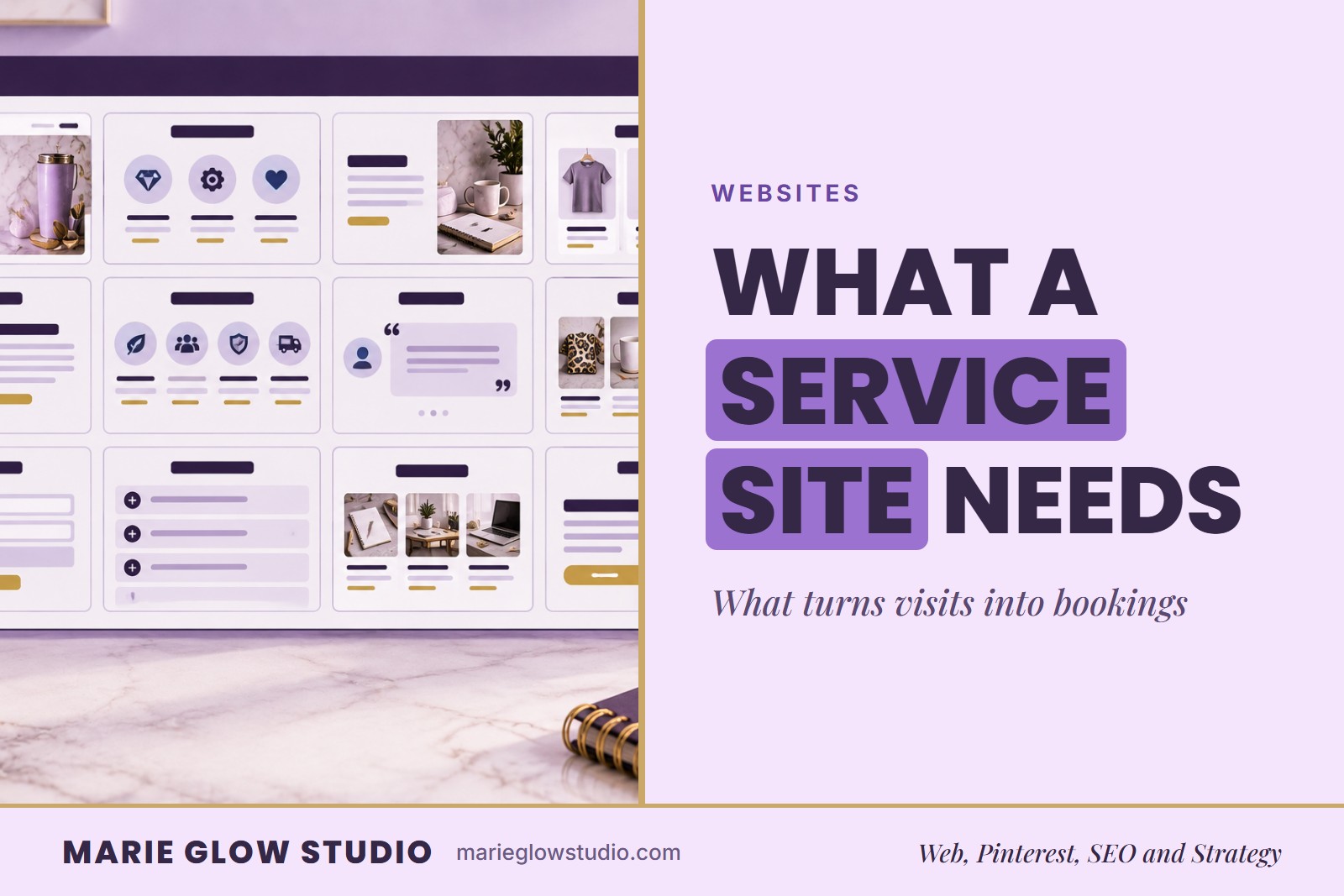
A service business website needs six things to turn a visitor into a booking: services with prices or ranges, one easy way to book, real trust signals, current location and hours, fast mobile pages, and a simple path back to booking from every page. Miss one and a ready visitor may check a competitor instead.
A salon, spa, contractor or coaching website is not trying to sell a product on the spot. It is trying to move a visitor from curious to booked, usually in one visit, in a matter of minutes. That means every page should answer the same three questions in some order: what do you offer, can I trust you, and how do I book. A page that answers only one of those well still loses visitors who needed the other two.
What services and prices should the site show?
List services in plain language, with either a price, a starting price or a clear price range next to each one. Hiding pricing behind a phone call adds friction and makes visitors assume the worst. If pricing genuinely varies by scope, a range plus a note about what changes it works better than no number at all.
- Service name and a short description of what is included
- Price or starting price
- Typical duration or timeline
- Who the service is for
How should booking work on the site?
Booking should take one click from any page, not a hunt through the menu. A dedicated booking tool such as Square Appointments, Acuity Scheduling or Calendly lets visitors pick an open time without a phone call, and it can send automatic reminders that cut down on no shows. If the business is not ready for live scheduling, a short quote or contact form with a phone number as backup covers the same need.
| Booking method | Best for | Tradeoff |
|---|---|---|
| Booking tool (Square Appointments, Acuity, Calendly) | Salons, spas, coaches with set appointment slots | Setup time upfront, less back and forth after |
| Quote or contact form | Contractors, custom or variable pricing work | Slower first response, more flexible scope |
| Phone number only | Businesses that prefer a live conversation | Loses visitors who wanted to act after hours |
What builds trust on a service business site?
Trust comes from specifics, not adjectives. Real reviews, before and after photos where relevant, credentials or licensing, years in business and a real photo of the owner or team all do more than a line claiming to be the best in town. A short, honest about section usually earns more trust than a long one written to impress.
How should reviews appear on the site?
Show a handful of real reviews near the services or booking section rather than on a separate testimonials page nobody visits. Quote the review directly, name the service if the reviewer mentioned one, and link to the full profile on Google or another review platform so a skeptical visitor can verify it themselves. Asking a happy client for a review right after a good appointment, instead of weeks later, tends to get more responses and more specific ones.
Why does location and hours matter this much?
Because a local visitor is often deciding right now whether you are open, close enough and available soon. Show the service area or address, current hours, and a map if there is a physical location, and keep this information the same on the website, Google Business Profile and any directory listing. Inconsistent hours or addresses across the internet quietly cost bookings.
What does the site need to work well on a phone?
Most local searches happen on a phone, often while someone is deciding right then whether to call. That means:
- The booking button or phone number stays visible without scrolling
- Text is large enough to read without zooming
- Forms are short enough to fill out with one thumb
- Photos load fast on a mobile connection
A site that looks great on a laptop but is slow or cramped on a phone is losing the visitors most ready to act. Website Mistakes That Hurt Conversions covers several of the same mobile problems from the general small business side, and Contractor Website Quote Requests covers the same mobile pressure from the quote form side.
How do you keep the whole site pointed at booking?
Every page, not just the homepage, should offer a way to book or inquire. A blog post, an about page or a services page that ends without a next step wastes the visitor's attention it worked to earn. Once a visitor finishes reading, the very next thing they see should be a booking link, a phone number or a short form, not a dead end. Customer Journey for Service Businesses walks through where visitors usually drop off along that path, from the first search to the follow up after an appointment.
How does this differ for a product business?
A product business is asking a visitor to add something to a cart, which is a smaller, more reversible decision than booking an appointment or hiring a contractor. A service business is asking someone to trust a person with their time, their home or their appearance, so the trust and location pieces above carry more weight than they would on a typical product page. Marie Glow Studio's page for service businesses and the page for product businesses lay out that difference in more detail.
If the current site is missing several of these pieces, a full rebuild is not always required. Marie Glow Studio's Website Starter is a one page site built around a service business's booking link, services, trust and location, ready in about five business days. For businesses that need more pages and a full brand identity to go with it, the Complete Website and Brand Identity covers a multi page custom-coded build built the same way, around how customers actually decide.
Frequently asked questions
Does a service business website need online booking?
It helps, but it is not required. A booking tool such as Square Appointments, Acuity or Calendly removes phone tag, while a quote or contact form works fine for businesses whose pricing depends on the job.
Should a service business list prices on its website?
In most cases yes, even as a starting price or range. Visitors who cannot find a price tend to assume it is expensive or move on to a competitor who shows one.
How many pages does a service business website need?
What is the biggest mistake on service business websites?
Making the visitor work to find out what things cost or how to book. Both should be visible within a few seconds on any page.
Keep reading
Contractor Website Quote Requests
Most contractor websites lose quote requests to a form nobody wants to fill out. Here is what makes a homeowner actually finish it.

The Customer Journey for Service Businesses, Step by Step
Salons, spas and coaches lose more clients between discovery and booking than most owners realize. Here is the journey, stage by stage, and where it breaks.

Local SEO for Service Businesses: Where to Start
A service business usually only needs to be found nearby, not everywhere. Here is what actually moves local search rankings, in the order to fix it.