How to Write Pinterest Descriptions That Get Found
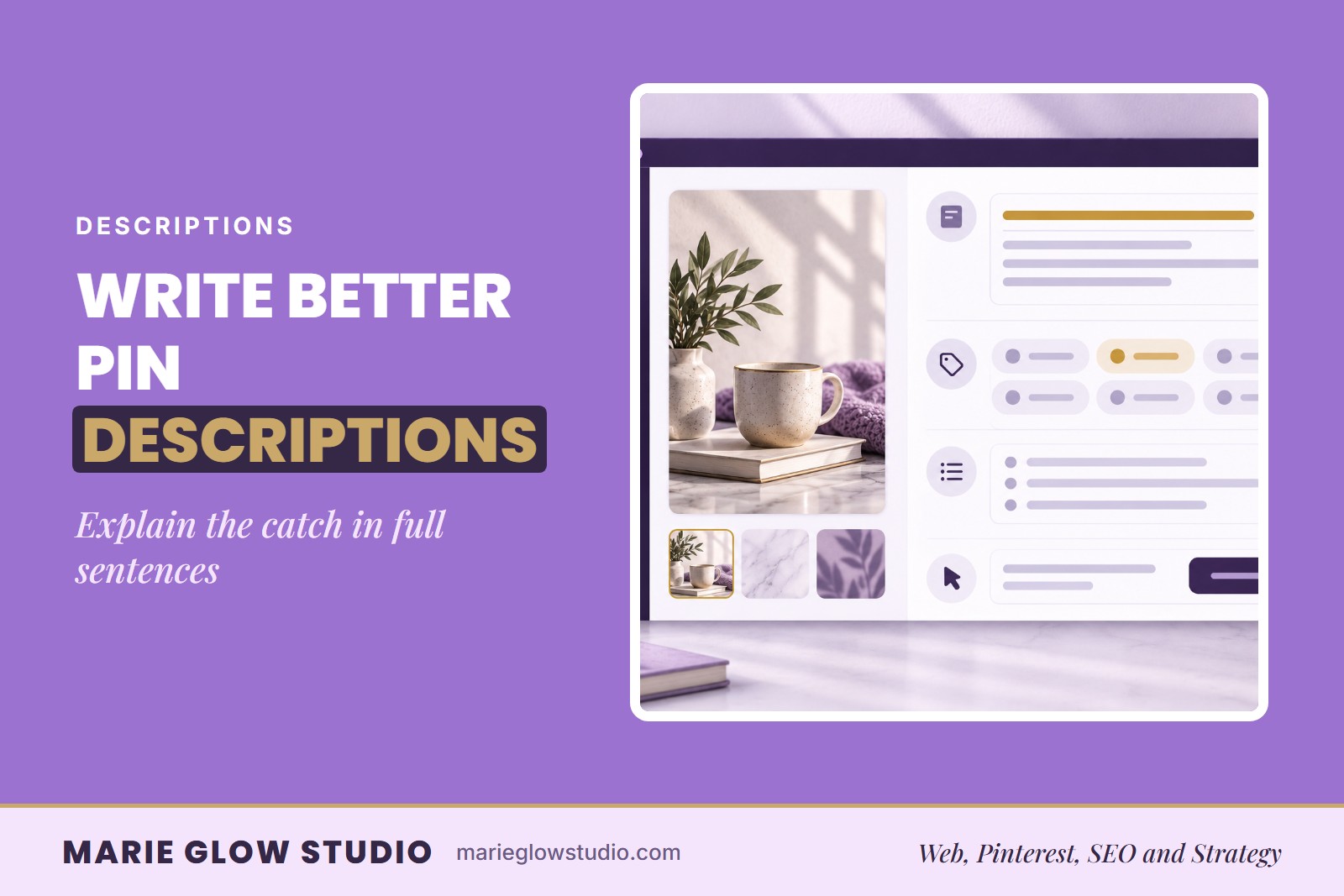
If your title is the hook, your description is where you actually get to explain the catch: most small businesses either skip it or stuff it with the same keyword five times. A good Pinterest description restates the title's phrase naturally, adds who the Pin is for, and reads as full sentences.
What is a Pinterest description supposed to do?
It explains what the title has no room to say. The title makes the promise in a handful of words; the description says who the Pin is for, what they will find and what problem it solves. Treat the two as a pair with the same subject and different jobs, and see how to write SEO-friendly Pinterest Pin titles for the other half.
The description is also where a Pin shows it is not a copy of the similar Pins around it. A specific audience, format or occasion gives it an identity of its own.
How should a Pinterest description begin?
Begin with the same core phrase you used in the title, restated in natural words rather than pasted in. If the title is "Pinterest Profile SEO: What to Optimize", the description can open with "Pinterest profile SEO starts with a name and bio that say what your business offers." The phrase is there, and the sentence still reads like something a person wrote.
Putting the main phrase in the first sentence also lets a reader confirm they are in the right place before they read on.
What context does a description add that the title cannot?
Aim to cover three things:
- Who it is for. Name the reader, such as shop owners, bloggers or first-time sellers.
- What is included. Say what the page or product actually contains, such as steps, a checklist or a set of examples.
- The problem it solves. Name the frustration the reader arrived with, in the words they would use.
Every detail has to be true of the destination page. If the description says checklist, the page has to deliver one, because a promise the page cannot keep costs you the visitor's trust.
Should a description be full sentences or a list of keywords?
Full sentences. Write one helpful sentence first, then work related phrases in where they fit naturally. A run of disconnected keywords tells the reader nothing and does not give Pinterest any more context than the title already did.
Repeating one keyword five times is a tempting shortcut, but repeating a phrase adds no context, and context is the point of the description. Variety comes from related phrases, and you gather those by following the process in how to do Pinterest keyword research.
How should a Pinterest description end?
End with a soft next step when one fits. A line such as "Save this for your next account clean-up" or "Perfect for bloggers and product shops" gives the reader a reason to keep the Pin and shows who it is meant for. The same rule applies as everywhere else in the description: say only what is true. If a closing line would sound forced, skip it and end on the last useful sentence.
What does a finished description look like?
Here is the difference, using a Pin for the profile SEO guide. First, the stuffed version:
Pinterest profile SEO, Pinterest profile tips, Pinterest business profile SEO, profile SEO Pinterest.
Now the version written for a person:
Pinterest profile SEO starts with a name and bio that say what your business offers. This guide shows shop owners and bloggers what to optimize on a business profile, from the name and bio to the connected website. Save it for your next account clean-up.
The second version restates the phrase once, names the reader, says what is covered and closes with a light next step.
What should you check before you publish a description?
- Does it open with the title's core phrase, worded naturally?
- Does it add who the Pin is for, what is included or what problem it solves?
- Does it read as full sentences rather than a list of keywords?
- Does every detail match the page the Pin links to?
- Is it different from the descriptions on your other Pins for the same page?
Do you have to write every description yourself?
No. Descriptions are one of the things a Pinterest SEO Audit checks: it looks over the titles and descriptions of your Pins as part of a wider account review, and it finishes with a 30 day action plan that puts the fixes in priority order. If you would rather hand the writing off, Monthly Pinterest Management includes SEO-focused titles and descriptions with every Pin it creates.
A well-written description gives Pinterest and the reader more to go on. It cannot promise clicks or sales by itself, because the image, the title and the destination page all carry part of the result.
Frequently asked questions
Should a Pinterest description repeat the Pin title?
Restate the core phrase from the title in natural words, then add what the title has no room for: who the Pin is for, what is included and what problem it solves. Do not paste the title in again.
Can I use the same Pinterest description on every Pin for one page?
It is better not to. Each Pin should still describe the destination page accurately, but writing a fresh description for each creative keeps them from reading as copies.
Keep reading
How to Write SEO-Friendly Pinterest Pin Titles
A Pin title has two jobs: tell Pinterest what the Pin is about and tell a person why to click. Here is a simple formula, five steps and the mistakes to check for.

How to Create Pinterest Pins That Get Clicks
A pretty Pin and a clickable Pin are not the same thing. This guide covers the goal, keyword, layout, text, destination, title and description, plus a checklist to run before you publish.

How to Find Long-Tail Keywords on Pinterest
Long-tail keywords are specific phrases that reach a smaller, more ready to act audience. Learn how they differ from broad terms, where to find them and how to use one per Pin.