Where to Start With Small Business Marketing
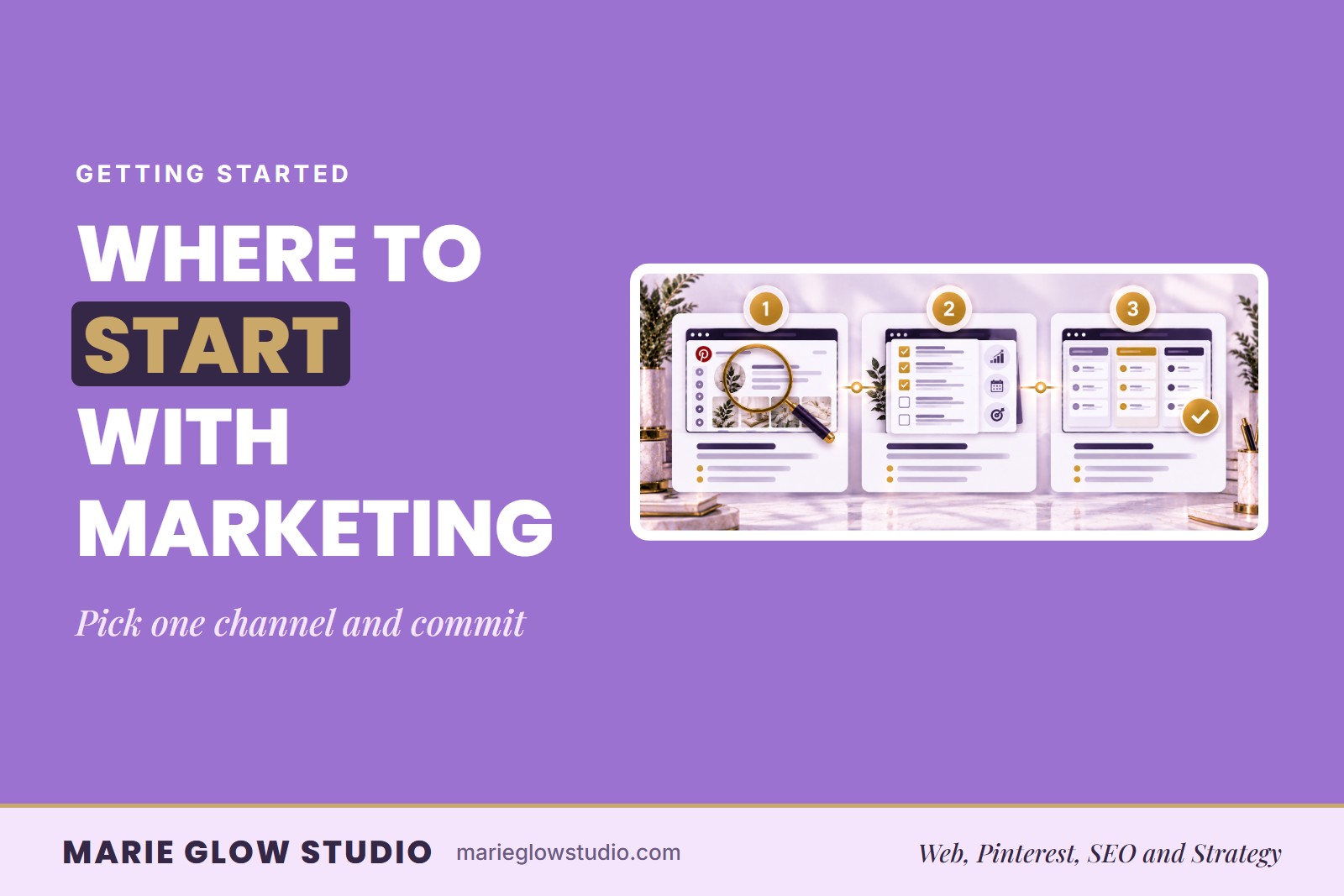
Start with one channel that matches how your customers already search or browse, and give it real time before adding another. Product businesses usually start with Pinterest or search, service businesses usually start with local search and their Google Business Profile, and almost nobody needs every channel running in the first year.
The most common marketing mistake for a small business is not picking the wrong channel. It is trying to run four channels at a quarter effort each, so none of them ever build enough momentum to work.
Where should a small business start with marketing?
Start with the channel where your customers are already looking for what you do, not the channel that feels the most exciting. A handmade product shop and a plumber are not looking for customers in the same place, so their first channel should not be the same either.
How do you choose your first marketing channel?
Answer three questions honestly, then pick the channel that fits the answers, not the one you feel you are supposed to be using.
- Where would a new customer naturally search for a business like yours
- How many hours a week can you actually give this, not in theory
- Do you have a website ready to receive the traffic once it arrives
If the honest answer to the third question is no, the real first step is the website, not the marketing channel that would send people to it.
What tools help you start with almost no budget?
Most starting channels are free at the setup stage, which is part of why they make sense as a first step. A Pinterest business account, a Google Business Profile and an email signup form can all be created without paying anyone. What costs money later, if it ever does, is speeding up results or handing the ongoing work to someone else once you know the channel works for your business. Starting free also removes the pressure to see an immediate return before you have even learned how the channel behaves for your specific audience.
Should a product business start differently than a service business?
Usually, yes. The table below shows a common starting point for each type, though a specific business can reasonably start elsewhere.
| Business type | Common first channel | Why |
|---|---|---|
| Product shop | Pinterest or Shopify SEO | Shoppers browse Pinterest while planning a purchase, and product SEO keeps working long after a post goes quiet |
| Local service business | Google Business Profile and local search | Most local searches include intent to book soon, so showing up there matters more than a general social presence |
| Coach or consultant | Email list plus one content channel | Trust builds over several touches, and email keeps that relationship going between content pieces |
| Digital product seller | Pinterest or a content channel tied to search | Digital products are usually discovered while someone is researching a problem, not while browsing a feed |
What does starting look like in the first thirty days?
It looks smaller than most owners expect. Setting up a Google Business Profile, creating a Pinterest business account and connecting it to your website, or writing the first three emails for a welcome sequence, are each things you can finish inside a single afternoon. The first thirty days are about setup and one steady habit, not about seeing a result yet. Owners who expect a big number in the first month often quit right before the channel would have started working, since most channels take longer than a month to build any real momentum.
How much time does marketing actually take each week?
Enough to show up consistently, which matters more than showing up often. A Pinterest account posted to for thirty focused minutes a week, every week, will usually outperform one posted to heavily for two weeks and then abandoned. Pick a pace you can actually keep for six months before you judge whether the channel works.
What if you have almost no marketing budget?
Pick the channel with the lowest cost to start, which for most small businesses is Pinterest, email or your Google Business Profile, since all three are free to set up and maintain yourself. Growing an Email List From Scratch and Pinterest SEO for Beginners both cover starting points that do not require paid ads.
What if you are not sure your website can handle any of these channels yet?
Test it before you invest more time sending traffic to it. Pick your five most important pages, the ones a new customer would land on first, and check that each one loads quickly on a phone, states what you offer and gives a clear next step. A channel cannot fix a website that confuses the very people it sends there. If that check turns up real problems, fixing the website earns you more from every channel you eventually run, since the same visitors will convert at a higher rate without spending anything extra on marketing itself.
When should you add a second channel?
Once the first channel is running on its own without daily attention, and you can point to some result from it, even a small one. Adding a second channel before the first is steady usually means neither one gets the attention it needs. What Is Digital Strategy for a Small Business? is a good next read once more than one channel is running, since it walks through how the pieces connect. The Customer Journey for Service Businesses, Step by Step is useful once your first channel starts sending real visitors somewhere. If you would rather see every option side by side with prices, Marie Glow Studio's full services page lays out web design, Pinterest, SEO and strategy together.
Frequently asked questions
What is the best first marketing channel for a small business?
There is no single best channel for every business. The right first channel is wherever your specific customers already search or browse, which looks different for a handmade product shop than for a local plumber, so the honest starting point depends on your business type, not a general rule.
Should I be on every social platform at once?
No. Spreading limited time and attention across many platforms usually means none of them build enough consistency to actually work, since each one needs a steady rhythm to gain any traction. One channel done consistently for months will usually outperform several platforms posted to occasionally.
Do I need a website before I start marketing?
You need somewhere ready for interested people to land and take a clear next step once a channel sends them there. If your website is not ready to receive visitors, or is missing a clear next step, fixing that is the actual first marketing task, even before choosing a channel.
How long before a marketing channel shows results?
It varies by channel and by how much consistent effort goes in, but most organic channels, including Pinterest and search, take several months of steady work before results become clear and reliable. Email can show smaller, faster signs of progress once a list starts growing.
When should a small business add a second marketing channel?
Once the first channel runs steadily without needing constant daily attention, and you can point to some real result from it, even a small one. Adding a second channel before the first has settled usually means neither channel gets the attention it needs to actually build momentum.
Keep reading

What Is Digital Strategy for a Small Business?
Digital strategy means looking at your website, search, Pinterest and email as one connected system instead of separate projects. Here is what that actually covers.

The Customer Journey for Service Businesses, Step by Step
Salons, spas and coaches lose more clients between discovery and booking than most owners realize. Here is the journey, stage by stage, and where it breaks.

Pinterest SEO for Beginners: A Simple Guide
Pinterest SEO is a simpler idea than it sounds. This plain-language guide shows a beginner where to start, where keywords go and how to tell what is working.