Welcome Email Sequence Examples for Small Businesses
A welcome sequence isn't a complicated funnel. It's a handful of emails that actually deliver what you promised, in the right order. Below are four examples: a three-email lead magnet sequence, a product-business sequence, a service-business sequence, and a waitlist sequence, each showing the purpose of every email.
These examples are frameworks, not scripts to copy without thinking. Adjust the timing, voice, disclosures, products, and calls to action based on what the person signed up to receive.
What is a welcome email sequence?
A welcome sequence is simply a planned set of emails that delivers what was promised, introduces the business, helps the subscriber, and offers a relevant next step.
What does a three-email lead magnet sequence look like?
- Email one immediately delivers the resource and welcomes the subscriber.
- Email two, one or two days later, helps them use it.
- Email three connects the topic to a relevant product, service, or article.
What does a welcome sequence look like for a product business?
- Email one confirms signup or sends the offer.
- Email two explains how to choose or use the product category.
- Email three shares materials, care, or process.
- Email four highlights a collection or customer favorite.
- Email five answers common buying questions.
What does a welcome sequence look like for a service business?
- Email one delivers the guide.
- Email two identifies the common problem.
- Email three explains the service process.
- Email four shares a case study or real example.
- Email five invites a consultation or service-page visit.
What does a waitlist welcome sequence look like?
- Email one confirms the waitlist and expectations.
- Email two teaches something related to the future offer.
- Email three shares behind-the-scenes progress.
- Email four provides launch timing.
- Email five announces access clearly.
How soon should the first welcome email go out?
When someone expects a download, code, or confirmation, send it within minutes. Test the automation and link before promoting the form. What Happens After Someone Joins Your Email List? describes what should happen around that first message.
Why give each email only one purpose?
Choose a main message and primary call to action. Extra links can exist, but the reader should understand the next step.
How do you build trust before applying pressure?
Useful guidance, clear expectations, honest proof, and relevant stories make later offers feel connected instead of sudden. The 5 Emails Every Small Business Needs describes the five messages most small businesses can start with.
What happens when the sequence ends?
After the sequence, add subscribers to the appropriate ongoing segment or newsletter and continue the type of content they expected. A sequence that ends in silence wastes the goodwill it built.
What can send a welcome sequence for you?
The Flodesk link below is a referral link. I may earn a commission if you purchase through one of these links, at no additional cost to you.
Because a welcome sequence is a set of automated emails, you need a platform that can send it for you, and Flodesk is one you can explore for welcome automations and signup forms.
What should you read after these sequence examples?
To see how the pieces fit into a full list-building plan, read Growing an Email List From Scratch. If your sequence depends on Pinterest visitors joining, the Pinterest SEO Audit is delivered as a single document within 4 business days of purchase.
Frequently asked questions
How many emails should a welcome sequence include?
Three to five emails are enough for many small businesses, though the right length depends on the promise, audience, and offer.
How far apart should welcome emails be?
Send delivery immediately, then space later emails roughly one to three days apart as a starting point. Adjust based on content and engagement.
What should the first welcome email say?
Thank the subscriber, deliver the promised item, briefly introduce the sender, set expectations, and provide one clear next step.
Should a welcome sequence include a sales email?
It can include a relevant offer after delivering value and context. The offer should match the reason the person subscribed.
Keep reading
What Happens After Someone Joins Your Email List?
The signup is only the start. Follow a new subscriber through eight steps, from the confirmation message to a welcome sequence and your regular newsletter.
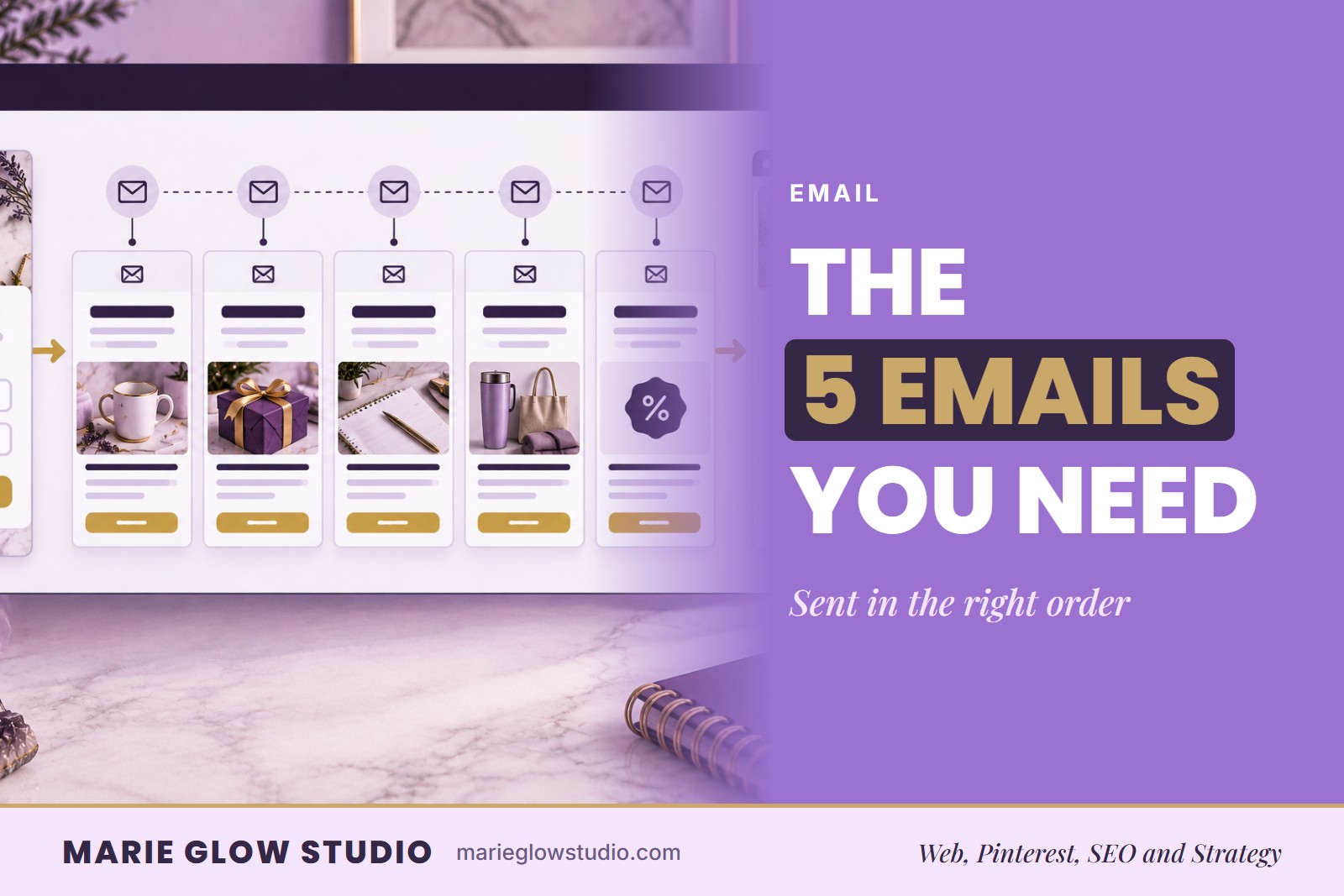
The 5 Emails Every Small Business Needs
You do not need thirty automations to start. Here are five emails, in order, that welcome people, build trust and make a relevant offer.
How Pinterest and Email Marketing Work Together
Pinterest gets strangers to your site and email keeps them. Follow the nine step path from a search to a subscriber and a lasting customer relationship.